Windy Hills Farm is no
longer the home base for our family as of yesterday at 10am. I have mixed
emotions about this. My mom characterized it well when she turned to me and
said, “I feel like we just sold your Dad.” My immediate response was to deflect
that statement and tell her all the reasons why she shouldn’t feel that way. I
hate seeing her feel so guilty about making the right decision.
Windy Hills Farm came
into existence largely due to the wants of me and my Dad. I dreamed of having
my horses at home, my dad dreamed of having a place to house my ever growing
horse collection because he intentionally lied to himself and said it would
surely be cheaper than boarding them all (cue the hysterical laughter at his
thought process here), and he also enjoyed being on a farm having spent much of
his childhood on his family farm. So my parents found a beautiful
piece of land, and proceeded to build a farm. As when Jason and I bought our
farm, Windy Hills was a blank slate when my parents bought it. Everything that
you could see at the farm, from the house to the fences to the arena and the
barns and other buildings, all had to be built. Trucks and trailers and
tractors and Bushhogs were all acquired. As farms are wont to do, it began to
fill up quickly.
the house at Windy Hills


Over the years the farm
accumulated an impressive collection of animals. Of course my horses lived
there. My dad kept a herd of heifers as well, although when it came time to
sell the calves and/or cull some of the heifers he sometimes kept his
favorites, and the collection of Pet Cows was born. The hallmark of many farms
is the collection of stray animals that inevitably arrive. We had the usual
stray dogs and cats. At its peak the farm had 22 dogs calling it home, and the
vet my parents took them all to was giving them every fifth spay/neuter for free.
The 1200 square foot garage didn’t contain any cars because it was almost wall
to wall with dog beds.
Buster

Apple, who lives at our farm today, the day she was born

One time one of the
stray dogs my parents took in began immediately gaining weight at an alarming weight, because, as
it turned out, she was pregnant with 13 puppies. I remember we went to the barn
and got a bunch of 5 gallon buckets to take the puppies to the vet for their vaccinations. We looked a bit odd walking
in the vet’s office with each of us holding a couple of 5 gallon buckets, but
we couldn’t think of a better way to transport and contain 13 puppies. It
actually worked quite nicely.


Given that the four of us
are all raging type A personalities we were not going to be outdone by anyone
on the stray animal collection. We did not just have the run of the mill stray
dogs and cats, we had stray goats and a stray flock of chickens as well. The
stray goats were living under the bridge by my parents’ driveway and we kept
thinking that someone was going to come get these goats. We asked around but no
one knew where they had come from.
Billy

Bubba

When it was clear that
no one was coming for the stray goats, my dad and I hooked up the trailer and
had what we referred to as the goat rodeo, and caught the stray goats. We put
them in a stall in the barn and my parents proceeded to have another paddock
fenced off with goat proof fencing, because that’s what you do when stray goats
show up. We built them their goat condo in their new goat paddock. There was a
male, a female and a kid, and my dad put his atrocious naming skills to use and
named them Billy, Nanny and the kid was Bubba (I still cringe as I type that).
True to stray animal form the nanny goat was pregnant, and she had triplets that that my
sister named Wynken, Blynken and Nod. Bubba was the last of the stray goats to
pass and we just lost him last year after having him for 18 years. He made the
move with Jason and I and the fainting goats to our farm.
Cloudy


Bush; one of the thirteen puppies born on the farm

Bush wearing his thundershirt

Bella in the front, Bugle in the back; both strays

We never knew where the
stray flock of chickens came from either. Yet one day they suddenly appeared,
wandering around the farm. They moved into the main barn and made themselves at
home for the next several years. There was a rooster, whom I named The Don, and
several hens. Every few months one of the hens would hatch a flock of chicks.
The Don earned his name because he was very aggressive towards his own kind,
although friendly to other species. I named him The Don because he was like the
head of a mafia family, constantly putting hits out on the other poultry. When
the chicks were old enough that he could tell which ones were roosters he would
kill all the roosters. We tried to stop him but now I know why it is possible
to have chicken fights. He wanted to fight and kill things. Over the years the
hens died of old age or from hawks, and the roosters met their fate from The
Don. He lived the last few years by himself, and he seemed quite content with
that arrangement.
The Don

one of the hens and her brood

Jason holding two of the The Don's offspring

My dad also bought
Sparky the donkey at a gas station and added him to the animal collection. One
Saturday when he went to Tractor Supply he came home with Poco the pony. There
was a flea market being held across the street from Tractor Supply and when he
saw the skinny, sad looking pony tied to a rusted out trailer he bought him.
Poco was never particularly grateful for his upgrade in life and ruled the
farm like a little tyrant, much the way Timbit does with our farm, until he
passed.
my mom and Sparky

Poco

I spent many happy hours
riding my horses all over the farm. I was fortunate to have a lovely, lighted,
all weather arena to ride them in. But I also spent many hours exploring every
inch of the farm from horseback. My horses and I galloped through the fields,
swam in the pond, jumped the little ditches and made trails through the woods.
I knew that farm like the back of my hand.
As my sister and I got
older and grandkids came into the picture, my parents had a tree house built
behind their house. There was a giant old tree that was the perfect
tree for a tree house. The tree house featured a giant deck, two lofts, a tire
swing, a climbing rope, benches for sitting, and a telescope mounted on the
rail.
the tree house

I think the best part of
the farm was that we had our own cave. When you first went in the cave you
found yourself in a "cavernous" room (pardon the pun). We found some
interesting things in there, some buttons from a confederate civil war uniform
and a few other things. It had clearly been used as a hideout at some point. It
was always fun to explore the cave.
Trooper the 3-legged lab mix; the last of the dogs still with us from Windy Hills

A typical scene at Windy Hills Farm, my dad's gator loaded with dogs. Trooper always sat on the floorboard, Bugle in the passenger seat, Bush and Bear in the back.

Bugle wearing my dad's Windy Hills Farm hat

I could write a book
about all of the memories that were made at Windy Hills Farm. Jason and I
even tested out the waters of having a horse retirement farm at Windy Hills
before buying and building out our own farm. For a couple of decades, Windy
Hills was the epicenter of our family and our Camelot of sorts.
the Big Boys grazing at Windy Hills Farm

Leo, Levendi and Homer at Windy Hills Farm

Elfin playing in the pond at Windy Hills Farm

A couple of years before
my father's passing Jason and I had moved the horses to our farm. My dad had
sold most of the cows and only had his pet cows remaining. There were still
plenty of dogs, the goats, The Don, Sparky the donkey and other animals calling
Windy Hills Farm home. However, once my father passed, the magic began to fade
quickly. When we have to say goodbye to one of the horses we always get pretty
clear signals from them as to when it is time to let them go. We experienced
the same thing with the farm. After my father passed his dog Bush passed
from grieving himself to death a few short weeks later. Our stray rooster, TheDon, died. My dog Bear died. The matriarch of the pet cows, Beulah, died. The most beloved and well known of the pet cows, Buster passed. You can read about Buster's passing here, and the rest of that story here. It
was clear that the thread of the fabric that was Windy Hills Farm was
unraveling.
Jason driving the gator with Bugle, Bush and Bear going along for the ride

My mom, my sister and I
were all in agreement that Windy Hills needed to be sold. However, as with many
things in life, we liked the idea of not being responsible for it more than we
like the reality of it no longer being ours. My mom didn’t need to live by
herself in a big house on 100 acres with barns and fences and equipment sheds
and all the things that go along with a farm. Jason and I were
becoming resentful of trying to be in charge of the farm when we were 45 miles
away. Doing much of the work ourselves was a burden. Having other people do the
work and trying to manage them when we weren’t around on a daily basis was an
equal burden. My mom was tired of managing and directing people to maintain the
house.
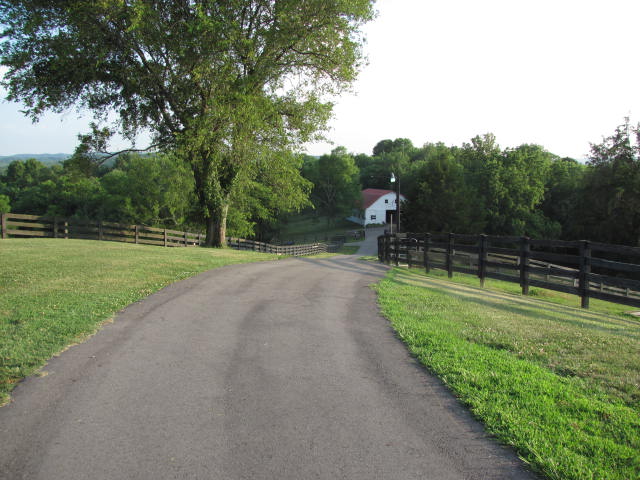
some pasture views


Windy Hills had become a
time and money drain that none of us were getting any enjoyment out of anymore.
It is amazing how things that were a blessing can almost immediately feel like
a curse in the right set of circumstances. When my father died Windy Hills
suddenly went from everybody’s happy place to the place that constantly needed
time and attention, and a place that was full of reminders that things had
changed. Dad had been the captain of that ship, and when he was gone none of us
were in a position to step up and take his place. My mom had never been
responsible for the farm itself and very understandably felt overwhelmed by the
prospect, my sister lives a few hours away, and I live on my own farm.
my mare Bonnie with her dam when she was 1 day old, born at Windy Hills Farm

We began the process of
cleaning out the farm and the house. My dad was an avid ham radio operator,
K4XG was his call sign, and he had over 500 radios that needed to be sold.
There were three huge ham radio towers that needed to be taken down. There was
a house full of other accumulated stuff. The barns were full, the equipment
shed was full of equipment, the workshop was full. Jason dealt with all of the
farm equipment, either getting it to a dealer to be sold or finding new homes
for it all. We cleaned out the barns, the hay loft, the workshop, the basement
and the attic of the house. My mom began construction on a new house in a subdivision.
fall at Windy Hills

We also had to get the
animals moved. We had to move the pet cows, move the goats, and move Sparky the
donkey all to our farm. No one will ever forget the epic process of getting Sparky
on a trailer:
Finally, after three
years of cleaning out, sorting, moving animals and deciding which memories to
throw away and which memories to keep, we were done. My mom moved to her new
house. Shortly after my mom moved to her new house, Bella, one of the two
remaining dogs, passed. Her ashes were the last of the Windy Hills Farm
residents to be scattered on the farm.
Bella sporting her summer 'do, the last of the pets of Windy Hills to have her ashes scattered at the farm

Selling the farm was a
non event. It was on the market for a grand total of three days with developers
fighting over it. I don't think any of them even went in the house. The farm
will soon be 100+ houses. So many people have asked if I am upset that it will
become a subdivision. Of course I would have preferred that it remain a farm,
as we all would, but I knew that it was highly unlikely. I also understand
that the only way to keep control over something, be it a farm or a horse or
anything else, is to not sell it. Over the last several years the face of the
street where the farm is has changed. It is now subdivisions all the way to the
farm and across the street from the farm, whereas 10 years ago it was all
farms. I don't resent this, most people live on what used to be someone else's
farm. Everyone needs a place to live.
O'Reilly, Lightning, Clay and Lucky grazing at Windy Hills

The developers asked to
use our family name either in the name of the subdivision or on the main
street. My mom flatly refused this, saying Dad would not want his name on a
subdivision or a street. I think I probably would have said yes to the request
myself, simply as a reminder to no one in particular that a family once owned
and loved the land; that the land had a history before it was a subdivision.
But it doesn't really matter either way.
the heron that lives at the pond

every year a new crop of ducklings learned to swim at the pond

After the closing
yesterday my mom and I went to lunch. We both fought back tears a few times.
Each time my mom would start to say something about how sad she was, or how
guilty she felt, I kept pointing out why it was the right decision to sell the
farm, trying to help her not be sad and not feel guilty. Finally, instead of
pointing out the obvious, I just held her hand for a minute to let her know I
understood, I felt it too. Sometimes we simply need to be understood and heard,
not told we were right, or wrong or anything else.
entry hall; that is Buster's portrait hanging over the bench

dining room

sunroom

living room looking into the dining room

Finally we were both
laughing and in a better mood. We talked about happy memories, and moved on to
other subjects completely. When we walked out of the restaurant to go our
separate ways in the parking lot I could tell my mom was starting to tear up
again as I turned to walk away. I started to go back and give her another hug,
and another squeeze of her hand, but then I didn't. We need to keep hugging and holding
hands, but we need to do it as we make new memories and start writing new
chapters in our book.
Rest in peace Windy
Hills Farm. I will miss you. May the laughter of many new families echo through
your hills for a long time.


 Posts

